
What is SCADA, and what hardware does it actually need?
A practical guide to SCADA systems in industrial automation: what SCADA does, why serial COM ports are still critical, how open-source platforms compare to licensed suites, and how to size the station computer.
Walk into any water plant, packaging line, or utility control room and you will find a SCADA system — Supervisory Control and Data Acquisition. It is the software layer that collects data from PLCs and field instruments, visualizes the process for operators, raises alarms, and logs history. The software gets all the attention. The computer it runs on usually gets none — until it fails at 2 a.m. on a Sunday.
How a SCADA system is put together
A typical architecture has three layers: field devices (sensors, actuators, drives), controllers (PLCs and RTUs doing the real-time logic), and the supervisory layer — the SCADA station that talks to the controllers, presents the process to humans, and stores the data. The station computer sits at the center: every tag, alarm, and trend passes through it.
- Data acquisition — polling PLCs over Modbus RTU/TCP, OPC UA, or vendor protocols.
- Visualization (HMI) — process graphics, setpoints, and operator control.
- Alarming — detecting excursions and notifying operators before they become downtime.
- Historian — logging values continuously for analysis, compliance, and troubleshooting.
Why COM ports are still critical in 2026
Industrial equipment outlives office IT by decades. The installed base of PLCs, flow meters, weighing terminals, and analyzers speaking RS-232/485 (Modbus RTU) is enormous, and replacing a working controller because a new PC lacks a serial port is money spent backwards. USB-to-serial dongles are the classic false economy here: adapter chipsets, driver quirks, and loose connectors are a leading source of "random" communication drops.
A proper SCADA station has native COM ports on the board — electrically stable, with fixed device names the software can rely on. This is why industrial computers like the IBOX-3026 carry 4× native COM alongside dual Intel LAN: one box speaks both the serial legacy and the Ethernet present.
Licensed suites vs. open-source SCADA
Commercial platforms (WinCC, iFIX, Wonderware) are capable but carry per-tag and per-seat licensing that grows with the plant. Open-source platforms — Rapid SCADA, ScadaBR, FUXA, and the industrial-IoT stack around Node-RED — have matured to the point where small and mid-size installations run them in production. They are a particularly good fit when the integrator controls the deployment and wants freedom from license audits.
| Consideration | Licensed suite | Open source |
|---|---|---|
| Upfront cost | Per-tag / per-seat licensing | None — engineering time only |
| Vendor support | Contractual SLA | Community + integrator |
| Protocol coverage | Very broad, certified drivers | Modbus, OPC UA, MQTT well covered |
| Long-term control | Vendor roadmap | Yours — source available |
What the station computer must survive
The SCADA PC usually lives in a cabinet on or near the line — dust, vibration, heat, and a power feed that browns out when the compressor starts. Office desktops fail here on schedule. The requirements that matter:
- Fanless, solid-state construction — no fan to clog, no moving parts to shake loose.
- Wide operating temperature — cabinet interiors run far hotter than the room.
- Watchdog timer — hardware-level recovery if the OS or application hangs.
- Auto power-on — the station must come back by itself after an outage, unattended.
- Native serial + dual LAN — PLC networks and plant IT stay physically separated.
A platform to start from
The IBOX-3026 is our reference SCADA station: 11th-gen Intel processors up to Core i7, up to 32GB RAM, 4× COM, 2× Intel gigabit LAN, and fanless industrial construction with watchdog and auto power-on. For heavier multi-display or historian duty, the IBOX-3226 steps up to 12th-gen Core with up to 64GB and four HDMI outputs.
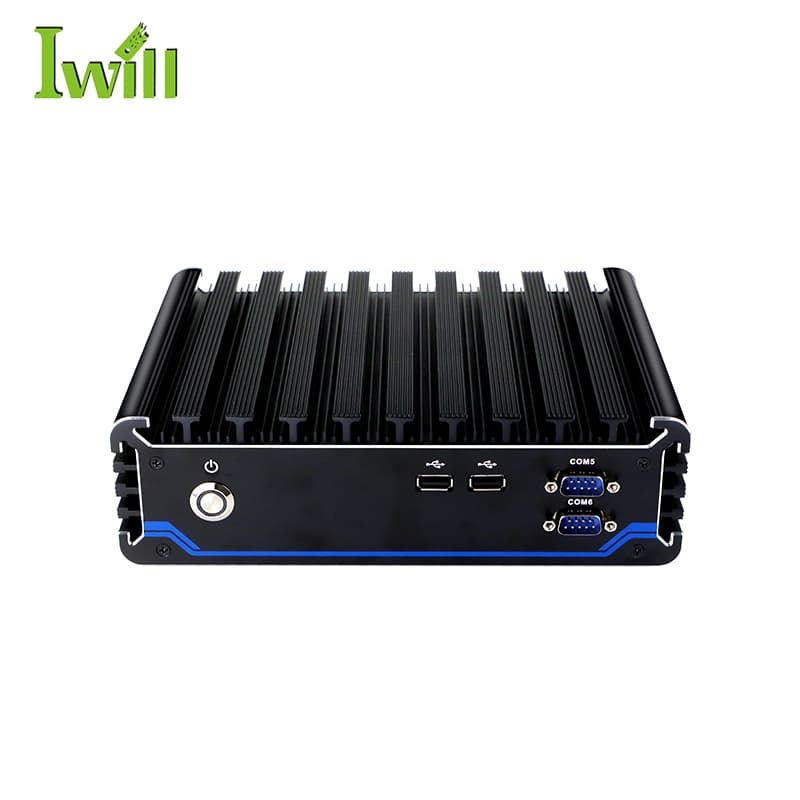
Industrial PCs
IBOX-3026
IBOX-3026: Intel Celeron 6305E / i5-1135G7 / i7-1165G7 (11th Gen) with 2x 1000M LAN (Intel chipsets).
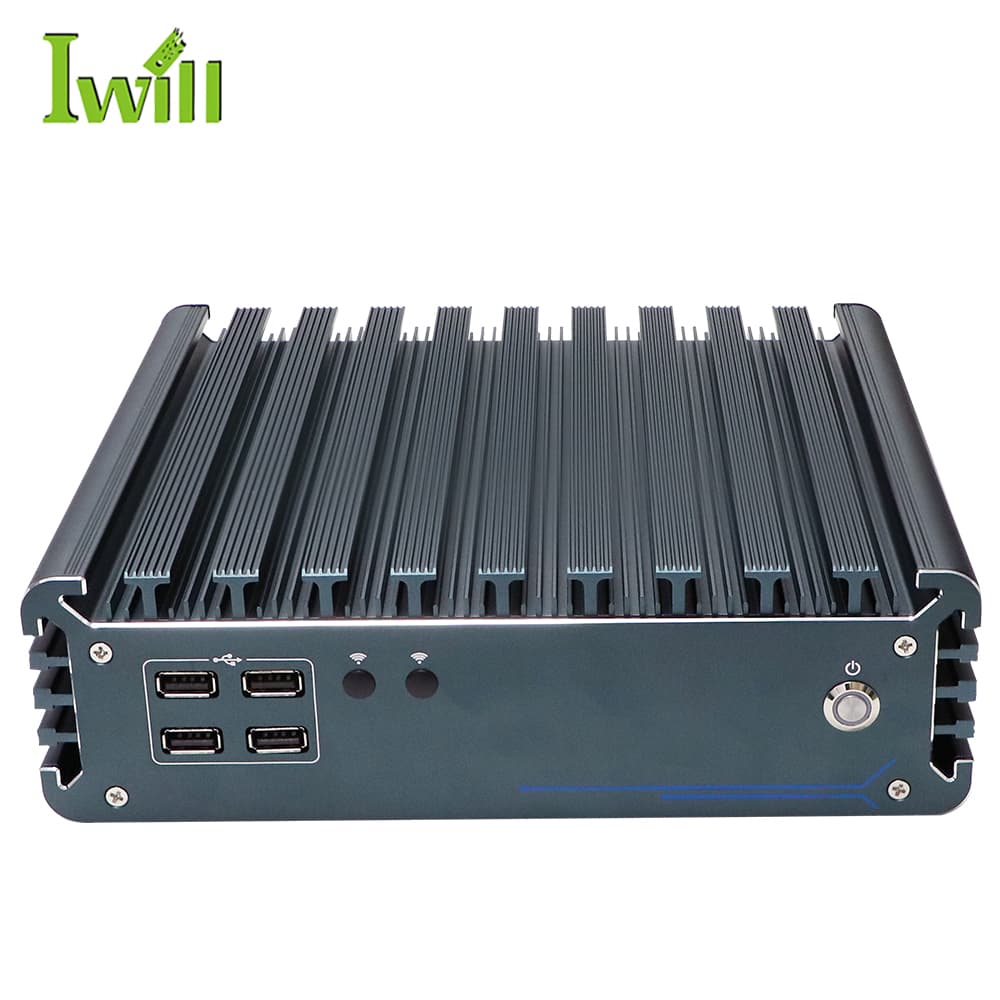
Industrial PCs
IBOX-3226
IBOX-3226: Intel i3-1215U / i5-1235U / i7-1255U (12th Gen) with 2x LAN.
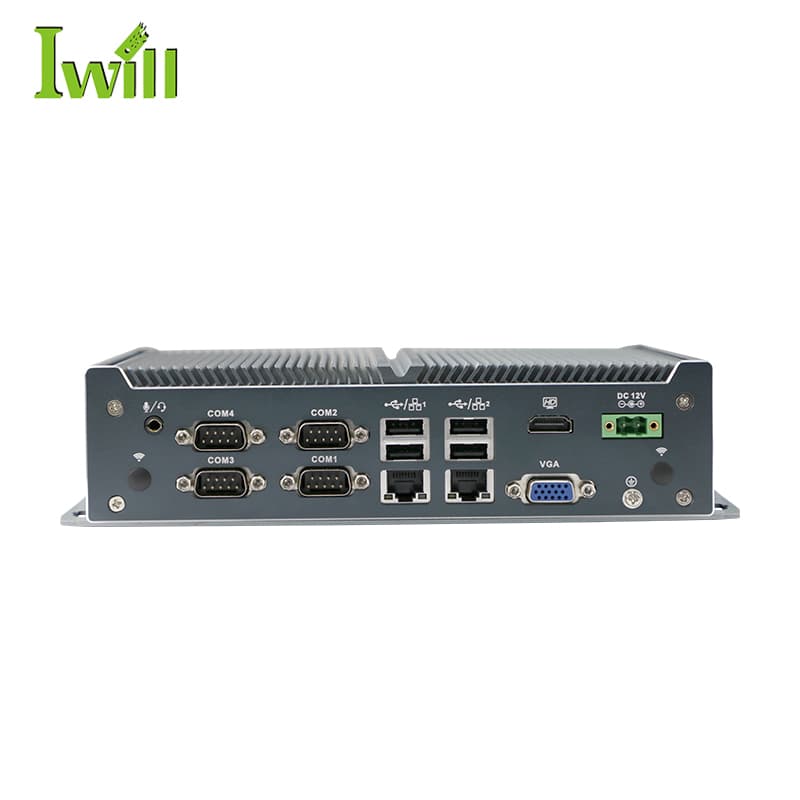
Industrial PCs
IBOX-1226
IBOX-1226: Intel Celeron J6412 (4 cores, 2.0GHz up to 2.6GHz) with 3x 2.5G LAN.
Tell us the PLC inventory, protocols, tag count, and environment — technical sales will validate the station configuration before quoting.
Discuss a SCADA project