
What is M-Bus, and why is it the standard for meter reading?
M-Bus (Meter-Bus, EN 13757) is the standard for remote reading of water, heat, gas, and electricity meters over a single two-wire line. How it works, and how converters connect an M-Bus network to a PC, PLC, or SCADA system.
Utility submetering has a physics problem: the meters are scattered across basements, risers, and mechanical rooms, and someone has to read them. M-Bus (Meter-Bus), standardized as EN 1434 / EN 13757, solves it with brutal simplicity — every meter in the building hangs off one two-wire line, powered and read over the same pair.
How the bus works
M-Bus is a master–slave bus. A single master (the converter or gateway) drives the line at around 36V, powering the meter interfaces and polling each device by address. Meters answer with standardized telegrams carrying readings, units, timestamps, and status. Because the two wires carry both power and data, topology is forgiving — star, bus, or tree wiring all work, and polarity does not matter.
- One cable pair for hundreds of meters — dramatically cheaper than per-meter wiring.
- Standardized telegrams — heat, water, gas, and electricity meters from different vendors coexist.
- Bus-powered slaves — the meter's M-Bus interface needs no local power.
- Distances in the hundreds of meters — with repeaters extending large sites further.
The "standard load" — sizing vocabulary
Every meter presents a defined electrical load on the bus (a "standard load," ~1.5mA). Masters are rated by how many loads they can drive: a 20-load converter runs a floor; a 250-load unit runs a tower. This single number is the first sizing question in every M-Bus project.
From bus to system: the converter family
An M-Bus network is only useful once its data reaches your software. That bridge is the converter or gateway, and the IWILL M-Bus family covers the standard patterns:
| Need | Product family | What it does |
|---|---|---|
| Serial into a PC or controller | IW-CM-M series | Transparent M-Bus ↔ RS-232/485, 5 to 250 loads |
| IP network integration | IW-ET-M series | M-Bus ↔ Ethernet (TCP server/client, UDP) |
| PLC / SCADA via Modbus | IW-MT-M series | Polls meters, serves data as Modbus-TCP registers |
| Unmanned remote sites | IW-GS-G series | M-Bus to Modbus over cellular (GPRS) |
| Large networks, 4 channels | IW-1000 series | High-current 4-channel master, 200 loads |
Where M-Bus earns its keep
- Multi-tenant buildings — fair, automated utility allocation by apartment or suite.
- Campus and district energy — heat and water accounting across buildings.
- Industrial submetering — energy per line or process for cost and efficiency programs.
- Building automation — consumption data feeding the BMS alongside HVAC control.
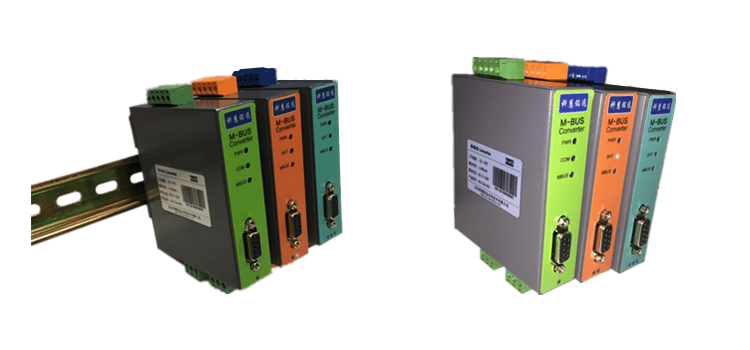
M-Bus Gateways
IWILL IW-CM-M Series
IWILL IW-CM-M Series m-bus gateways platform.
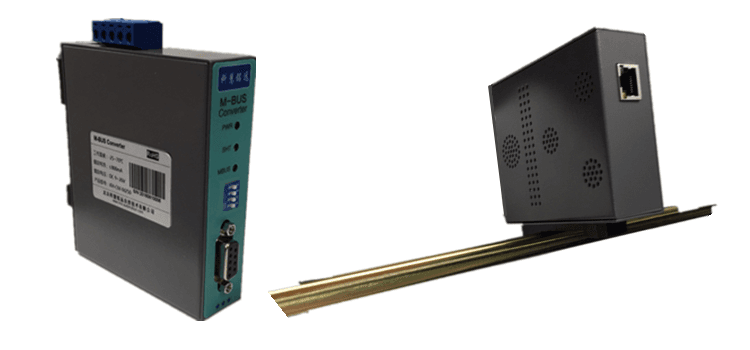
M-Bus Gateways
IWILL IW-ET-M Series
IWILL IW-ET-M Series: Ethernet 10/100M, adaptive.
M-Bus Gateways
IWILL IW-1000 Series
IWILL IW-1000 Series m-bus gateways platform.
Describe the site and meter inventory — we will size the masters, repeaters, and gateways.
Plan an M-Bus network